Neighbors of Eagle Trace Golf Club worried over club’s future
Broomfield course could lose access to irrigation water in Fall 2026
By Jim Bebbington
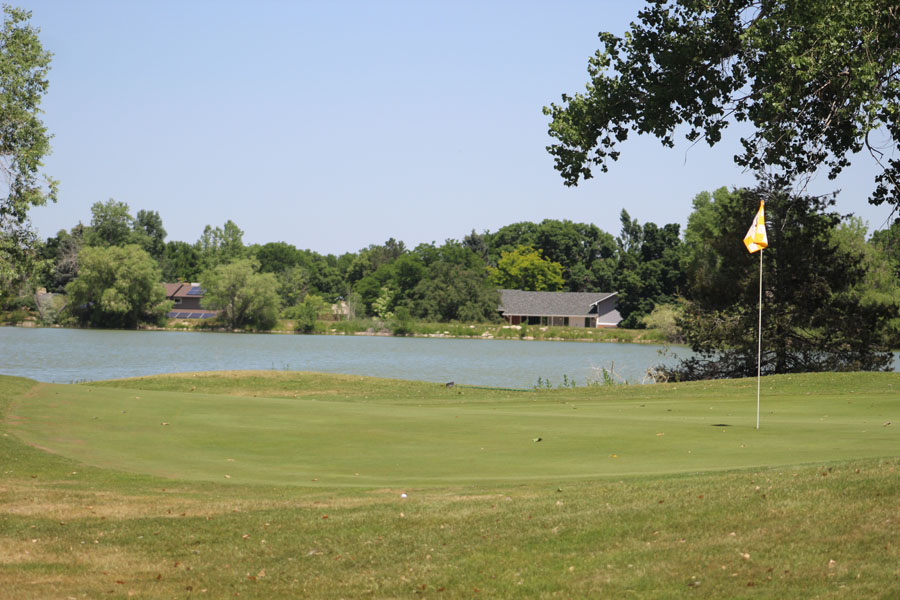
Eagle Trace Golf Club in Broomfield is one of dozens in Colorado that was built in the 1980s and 1990s as an anchor for a new residential development.
Eagle Trace Golf Club in Broomfield.
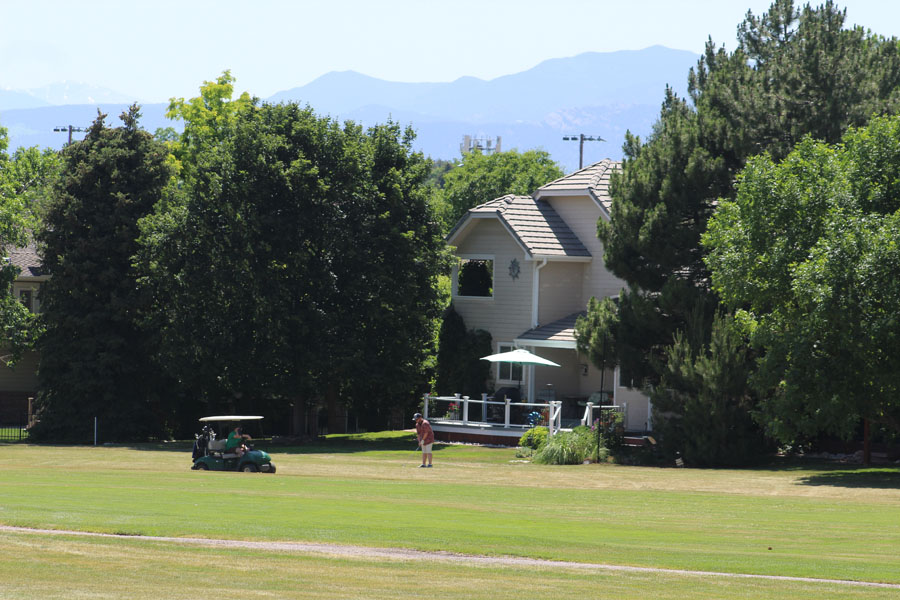
Houses line most fairways and backyard decks are built in many cases to take advantage of the views.
Now, homeowners around Eagle Trace are worried the course is on track to close in the fall of 2026 because its owner sold the courses’ water rights last year. They’ve met with the city and put out an all-points bulletin to their fellow homeowners for help.
Because without water – and without a plan – the course is at risk of becoming unmaintained ground in their backyards.
A similar fate fell to neighbors of the Deer Creek Golf Club in Littleton. The owner there sold off the water in 2023, and the course has since returned to native grasses and woods.
This is a fate that the Eagle Trace neighbors are trying to avoid. Nationally, as residential development golf courses have closed elsewhere, home values for houses directly touching the courses have declined an estimated 10 to 30 percent, according to reports.
Eagle Ridge Golf Club has several memorial plaques in the middle of fairways to celebrate players of its past
“Once irrigation ends, the course will be feral, its turf, trees, and landscaping will dry out and die, gradually being overtaken by natural weeds and unmanaged vegetation,” said a document the five HOAs that surround the course sent to their members in May.
The document noted that the situation is already impacting homeowners who are trying to sell because now that they know about this situation homeowners are required by law to tell prospective buyers.
Representatives of the city of Broomfield did not make city staff available for comment for this article, but released a statement on the issue.
For the city, the matter is not just that hundreds of its homeowners may see their property values erode. The course was taken into account as part of the city’s open land plan, which was adopted in 2016. It’s supposed to stay open land – and not be used for more home development; the zoning for the land can be changed but not without a significant review process and city council approval.
Eagle Trace Golf Club is irrigated partly with water from two reservoirs maintained on the property. Water rights that help fill those reservoirs were sold off in 2024 and expire in 2026.
The city staff has told the neighborhood HOAs it is unlikely the city could buy the course and run it as a golf course unless ordered to do so by the city council. Access to water is among the biggest issues. The course’s two reservoirs are filled with the help of water taken from nearby streams under water rights that date back to 1889. But the owner of the golf course – a company headed up by a California attorney – sold those rights to a third party in 2024 and that group plans to use them in a Lafayette development, according to the city. That attorney, Miles D. Scully, did not return calls and emails for comment for this article.
If a new water source is not found, the spigot turns off Nov. 1, 2026.
“At this point, it’s premature to try to predict what would/could/will happen in the future; however, it is expected water will be needed to do almost anything that could potentially be proposed in the future whether the property remains as a golf course or is considered and approved for some other use or combination of uses,” Broomfield’s FAQ states.
Bruce Erley, who is president of one of five homeowner’s associations in the vicinity of the course, said he and other neighbors are working to avoid the land just turning fallow. He said some residents favor converting the course to open space with walking trails. Others are hoping the course can be saved with a new source of water.
“A dry-up is simply an unacceptable future,” Erley said.
The fact-sheet provided by the HOAs to the residents said any solution to reacquiring water for the course will be costly.
“Identifying a viable and legal water solution remains the most critical challenge in determining a path forward,” it said. “What is clear, however, is that any potential solution will come with a significant financial cost in the multi-millions of dollars.”
Erley moved his family there 30 years ago. He does not favor anything that brings significant amounts of new housing development onto the course. “No one has bought into a golf course community to have streets put in and condominiums,” he said.
They are exploring how to fund the creation of a new parks district which might be able to acquire the course and then issue bonds to fund water. They are also hoping the course ownership would donate the land.
Many fairways at Eagle Trace are line with homes.
“We want to keep it as it was originally intended,” he said.
The HOA fact-sheet said that some possible solutions include reducing the operation from a full 18-holes to a shorter, less water-intensive executive course. Some neighbors are also advocating that if a parks district is created it work to improve the overall amenities for everyone – with trails and racquet courts as well as the course.
The neighbors are pledging to work to find a solution that works for everyone.
“This is a matter of vital importance to everyone who loves our community and wants to protect both our quality of life and our property values for the future,” the HOA fact-sheet stated.
Jim Bebbington is the Director of Content at Colorado AvidGolfer and can be reached at [email protected]
Colorado AvidGolfer Magazine is the state’s leading resource for golf and the lifestyle that surrounds it, publishing eight issues annually and proudly delivering daily content via coloradoavidgolfer.com.
Want to increase golf swing speed and hit longer drives? Learn two simple ways to add clubhead speed, improve hip rotation, and create more distance off the tee.
The Japanese brand that’s part of Dunlop Sports appears to be disrupting conventional launch dates with the September/October releases of its latest equipment