Callaway’s new Opus SP+ is designed to give you full control of your wedge shots
By Tony Dear
Some readers might get confused when manufacturers, players, and writers talk about lowering or flattening the trajectory of a wedge shot to create a more piercing ball-flight. Aren’t wedges supposed to send the ball high? They have the most loft of any club, after all, as they’re used for short shots where you might need to clear a bunker or water hazard, or spin the ball to hit it close to a tight pin. And doesn’t sending the ball really high mean it stops quicker on the green?
Yes, that’s all true…to a point. The loft, be it 46˚ or 60˚, will indeed hit the ball plenty high. But here’s the thing, you don’t want it going excessively high. You don’t want your ball floating and at the mercy of the wind. Shoot the ball up too vertically, and it sits in the air just waiting to be thrown off course by even the slightest breath of wind.
Ideally, you want the ball flying fairly low (not low low, you understand, but lower than it did with wedges more than 15-20 years old) on a flat trajectory, but then gripping the turf as soon as it hits the green and coming to a fairly rapid halt. That is a far more controlled shot than the wedge shot of yesteryear, and, if you play it correctly, it should lead to significantly more birdie putts and par saves.
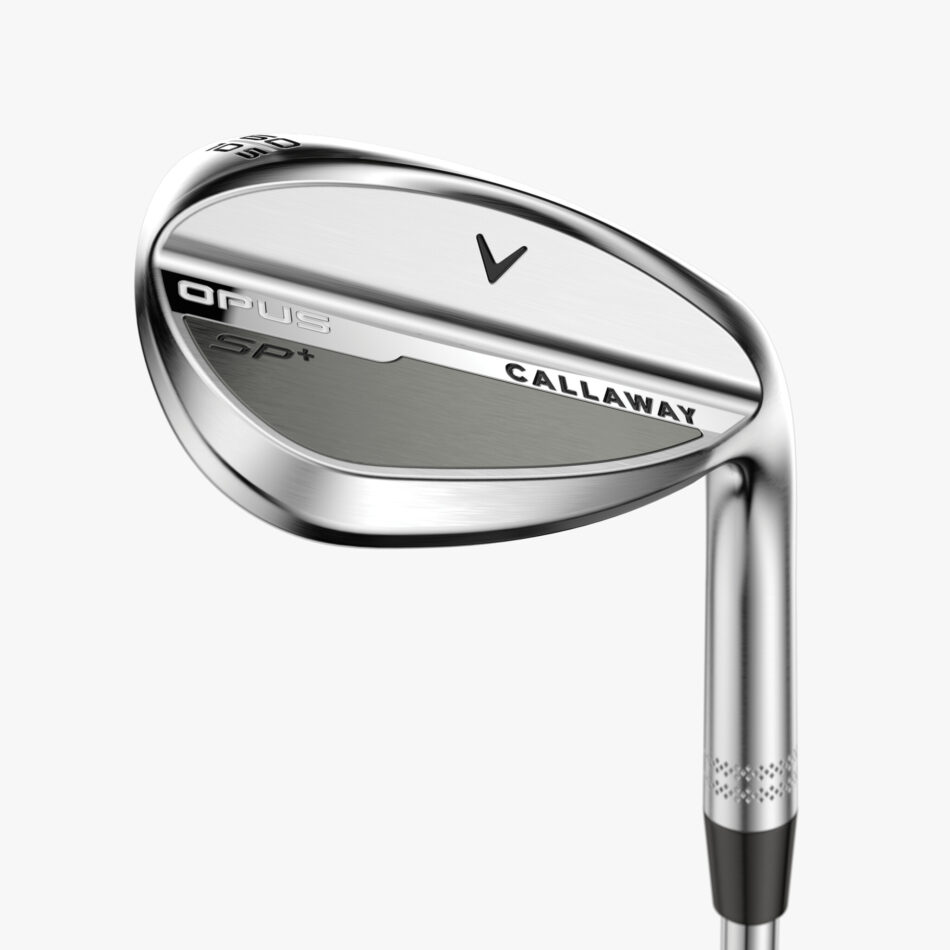
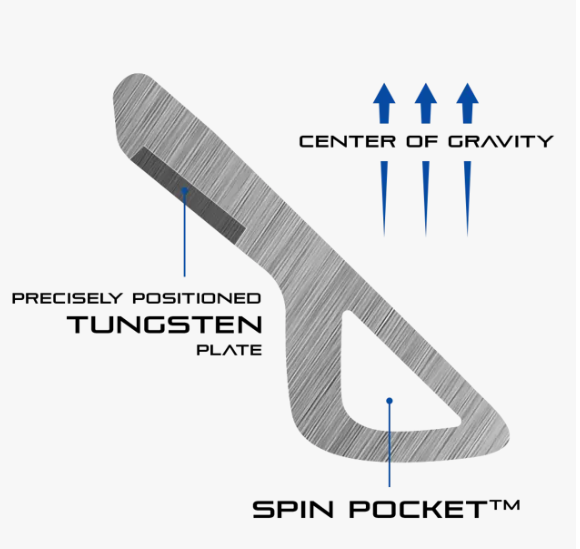
In recent years, wedge-makers have made the low-flying and fast-spinning wedge shot considerably easier to play by positioning the club’s Center of Gravity (CG) higher than it used to be and improving the clubface’s ability to spin the ball (while staying within the rules, of course).
Dimensions and appearance are also important as they always have been with any club, so manufacturers worked on improving the look as well as the tech. The head of the Opus SP+ is known as ‘Shape 6’ simply because it was the sixth headshape tested by Callaway’s Tour staffers.
Before it launched the original Opus in the late summer of 2024, Callaway made well-received wedges like the Mack Daddy, Jaws, and CB. The Opus and the Opus Platinum, launched shortly after the original, sent the company’s wedges to another level, though. And then, in 2025, came the highly-acclaimed Opus SP and the introduction of the innovative Spin Pocket (the ‘SP’ part) which essentially made the SP wedge a cavity back. It was far more nuanced than that, however: a traditional cavity sought to give the club a higher MOI and make it more stable at impact, while the Spin Pocket was smaller, specifically positioned low in the head, and was there to raise the CG rather than increase forgiveness and stability.
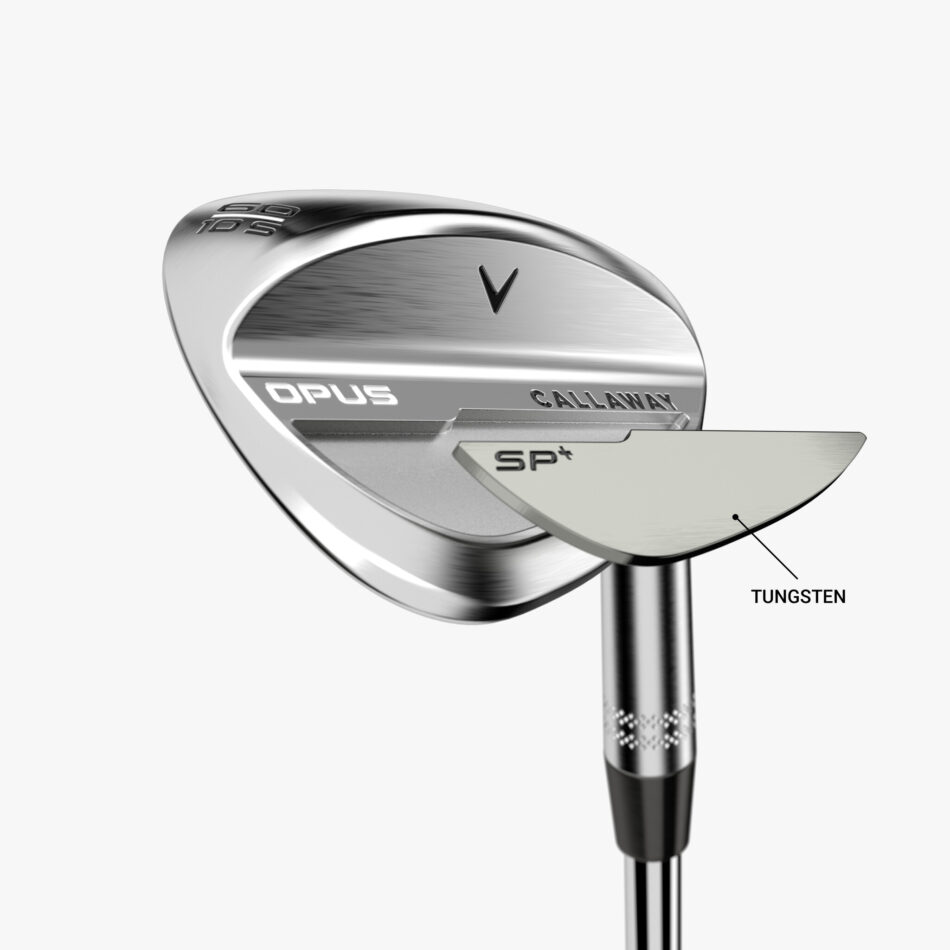
In the new Opus SP+, the Spin Pocket is 25% larger than in the original Opus SP, and there’s over 20% more tungsten near the top of the head than there was in the Opus Platinum. So, as you can imagine, the CG is raised higher still and the resulting trajectory flatter.
As for spin, the face, which is Metal Injection Molded (MIM – the body is cast 8620 steel), features 2.0 Spin Gen Technology – a 17-degree groove angle with tighter-spaced grooves to create more groove contact and, in turn, says Callaway, not only more spin but more consistent spin. The micro-grooves between the larger grooves are also deeper to make the face rougher and increase friction.
The Opus SP+ is offered in 54˚, 56˚, 58˚, and 64˚ of loft, and in three grinds: Z (lowest bounce – 8˚, with heel, toe, and trailing-edge relief); X (highest bounce – 12˚); and S (middle bounce – 10˚).
$230 per club
Lofts – 54˚ – 60˚
Bounce – 8˚ – 12˚
Shaft – True Temper Dynamic Gold (steel); UST Mamiya Recoil Dart HDC 65 (graphite)
Right-hand, but 56˚ with 10˚ of bounce, and 60˚ with 10˚ or 12˚ of bounce are also available in left-hand.
Available for pre-order now, and in stores on Friday (March 6th)
callawaygolf.com