Any golfer who’s ever lined up a shot shrouded by foliage may tell themselves this, but more often than not, their ball finds the other 10 percent. For good and bad, trees are an integral part of many golf courses.
In the spring and summer, golfers may praise them for providing some extra security when someone yells “fore” from an adjacent hole. In the fall, they are cursing the mess they look among thousands of leaves for their very findable tee shot in the rough. While trees of all shapes and sizes can make a hole visually spectacular, some leave golfers questioning every decision as they work their way from tee to green. Colorado has numerous golf holes where trees can wreck a scorecard and have you wishing for a chainsaw.
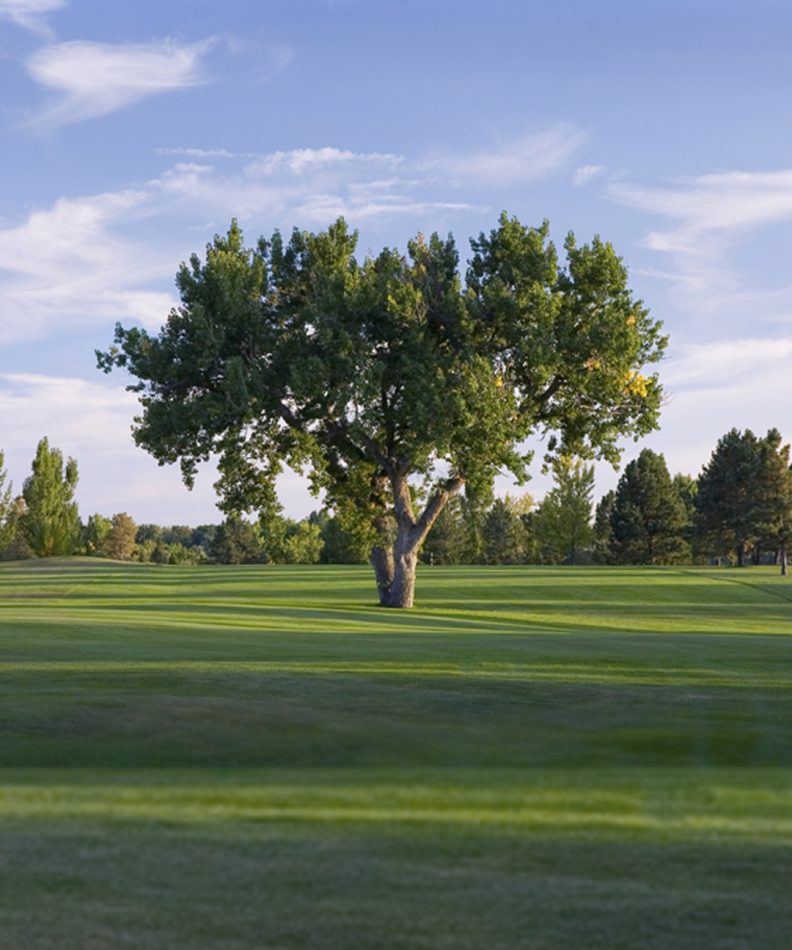
At Green Valley Ranch Golf Club, two holes were designed to not just preserve two large cottonwood trees, but to make them an integral part of the challenge. On the par-5 No. 2, one massive tree lies in the middle of the fairway near where drives tend to land. It’s best to favor the left side of the tree as the rough comes more into play on the right side. Then, as players approach the green, there is another massive cottonwood roughly 50-75 yards in front of the green. It’s just sitting there in the middle of the fairway.
How. Rude.
If the approach shot is too close to it, then it may be necessary to punch one under the tree. Ideally, golfers should try to have a shot that is a little further out to allow themselves enough room to get up and over the tree to reach the green.
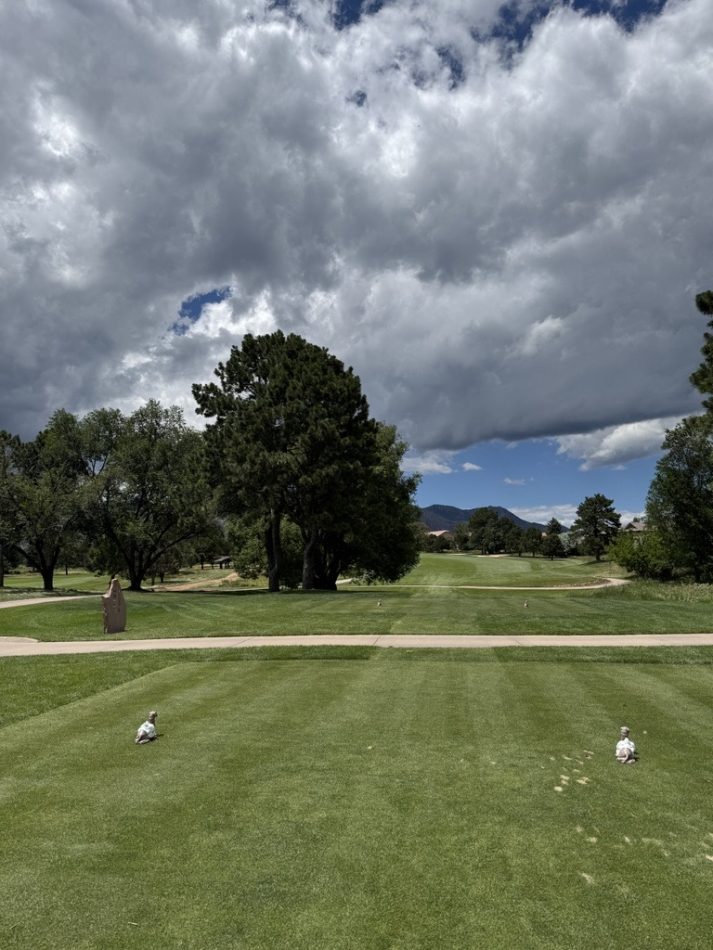
On the back nine, the par-4 No. 16 is a relative creampuff distance-wise – mere 290 yards away from the middle of the tee boxes. But it can be nothing short of cruel to golfers of all skill levels. Even with a well-hit tee shot, golfers have a good chance of finding themselves behind the small grove of tall trees that were left in place and the fairway designed around them.
“Sixteen is one of the trickier holes out here and certainly puts an emphasis on the placement of your tee shot,” says general manager Matt Brvant. “The more left-center or left side of the fairway you can put your tee shot, the better position you have into the green where the trees wil be less likely to come into play.”
During the Inspirato Colorado Open tournaments, it is common to see men tee off with irons, hoping to either be left or at least far back from the trees. Even from the left side, it’s still a tight shot into the green, but at least the trees aren’t as daunting. Coming away with par is worthy of a celebration, not this difficult hole in the final stretch.
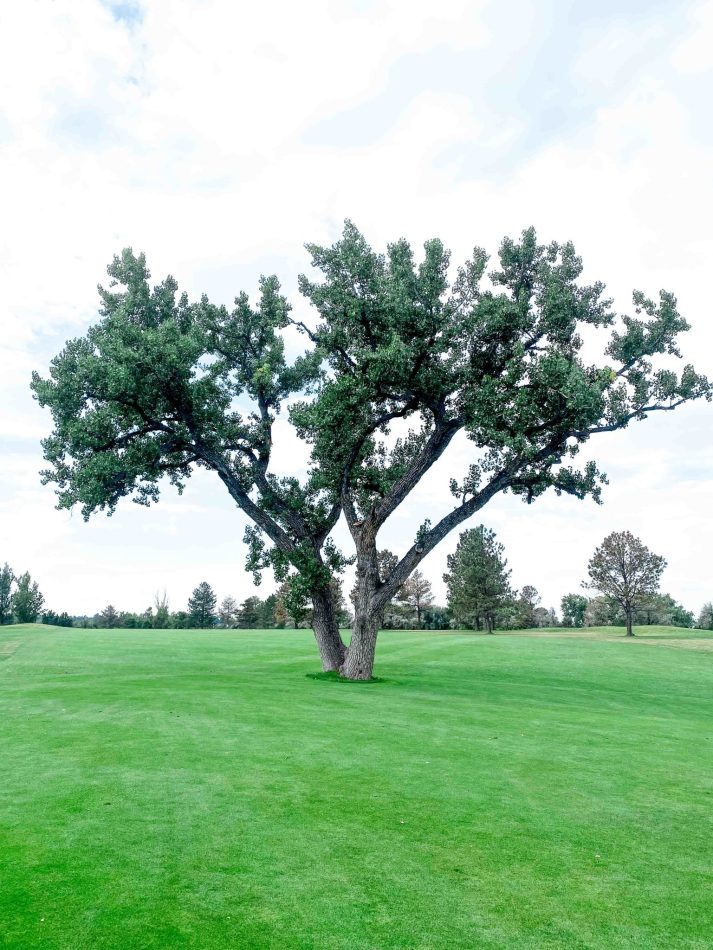
At the Greg Mastriona Golf Courses at Hyland Hills in Westminster, one tree is so infamous that it is the inspiration for the course logo. A cottonwood that is diabolically located in the center of the fairway on the par-5 No. 15. It’s one of those trees that is 90 percent wood and will send a shot backwards 50 yards if it’s hit just right. From the tee, golfers have an important decision to make: Left or right. Cade Jeffers, the superintendent of Hyland Hills, says regardless of what tees golfers play from, it’s not feasible to go over the trees and estimates its height between 60 and 80 feet tall.
It’s roughly 150 yards from the tee box and playing to the right of it is the safer move since the fairway opens up more on that side. The tree makes the hole considerably more difficult and has surely been the recipient of many four-letter insults as golfers watch a good drive get stopped in its tracks and deflected into a terrible lie. It’s also more rewarding when one can get past it with ease and onto the green in regulation.
“It’s near and dear to everyone’s hearts because it adds a lot of character ot our course,” Jeffers says. “There’s not another hole like this on the property because otherwise it’s just a long, 524-yard straight par-5. But with that tree there, it changes your first shot right of the tee box.” While it’s always nerve-racking having a tree to deal with from the tee box, it’s arguably more frustrating when a great tee shot is wasted when an approach shot is knocked down by a tree.
On No. 5 at the Pinery Country Club’s mountain course, a tee shot on the right side of the fairway wil bring into play trees that tower over the green. It may be the shortest par-4 on the mountain course at 337 yards from the blue tees, but these trees help make it the No. 1 handicap hole.
“If you don’t hit a solid shot high enough to get over the trees, it’ll get caught up in them,” says general manager Mike Jones. There used to be another tree in the cluster that was chopped down because it was too obtrusive. Club members probably stood around and cheered as it fell.
The ones that are there aren’t going anywhere because they aren’t harming the turf in any way. Golfers will just have to brace themselves for the shot into the green and hope for the best. In Colorado Springs, golfers playing Kissing Camels at Garden of the Gods Resort and Club have a tree on No. 3 on the North course that – again! – helps create the No. 1handicap hole. To score par or better on this hole, players need to drive short of the bunker on the right side of the fairway (nearly 270 yards from the tee), while also having a decent look at the green that takes a cottonwood on the left out of play.
“(From the fairway) fI you want to get creative, you could take your shot over the cottonwood tree with a slight draw, but then you would bring tall native grass and rough into play, and fi you don’t h i tyour mark, you also bring bogey or worse toyour score,” says head professional, Jon Roth. “The optimal shot would be to hit a hybrid or wood, to try and keep it right of the tree and short of the bunkers, which would leave the golfer about 125-150 yards from the green.”
Garden of the Gods Hole 3
There is a modern trend for tree removal, with courses like Oakmont Country Club setting an ambitious example after removing more than 12,000 trees ahead of hosting the 2025 U.S. Open. But for many courses, that would rob them of much of their charm. Remove the trees on Magnolia Lane and all that will be left is Magnolia plain.
According to Michael J Hurdzan in his book Golf Course Architecture, early Scottish writings about golf course design viewed trees as unfair and granted them no place on a course. Not a surprising sentiment given Scotland’s style of links courses, where the tallest plants are gorse bushes. Luckily, the game and golf course design have evolved.
Colorado AvidGolfer Magazine is the state’s leading resource for golf and the lifestyle that surrounds it, publishing eight issues annually and proudly delivering daily content via coloradoavidgolfer.com.
Want to increase golf swing speed and hit longer drives? Learn two simple ways to add clubhead speed, improve hip rotation, and create more distance off the tee.
The Japanese brand that’s part of Dunlop Sports appears to be disrupting conventional launch dates with the September/October releases of its latest equipment