A new kind of workspace where golf, business, and community come together in Denver
That growth hasn’t happened by accident. The original Greenwood Village location reached full capacity in just over a year-an early signal that the concept was tapping into something real.
Clubhouse Work & Golf wasn’t built as a novelty; it was designed as a professional workspace first, with golf layered in as a catalyst for connection, collaboration, and client engagement.
But beyond the square footage and amenities, the real differentiator is the experience. The space is intentionally designed to eliminate the friction that defines traditional offices-isolated workdays, uninspired meeting spots, and networking that feels forced. Instead, it creates an environment people actually want to be in, where productivity and lifestyle aren’t competing priorities, but part of the same equation.
In many ways, it reflects a broader shift in how-and where-people want to work. Coworking itself is booming nationwide, but what separates Clubhouse is its intentionality. This isn’t just shared desks and cold brew on tap-it’s a curated environment where relationships are built more naturally, whether that’s during a quick putting session between meetings or a longer Trackman round with a client.
And that’s ultimately the story here. Clubhouse Work & Golf isn’t just building offices-it’s building a new kind of professional ecosystem. One where business gets done, relationships deepen, and the lines between work and life don’t blur-they finally make sense.
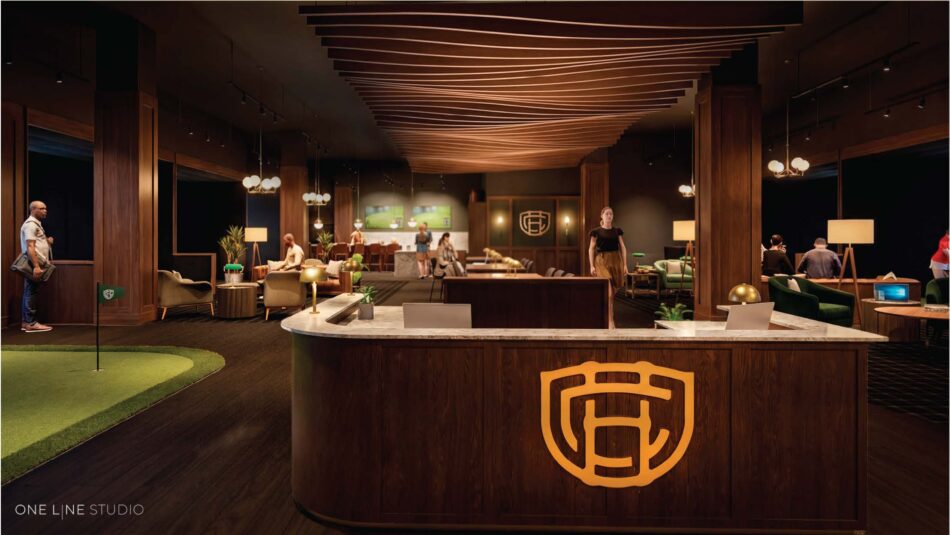
That demand is fueling rapid expansion. In addition to adding more private offices and simulators at its original Denver Tech Center footprint, the brand is preparing to open a second, larger location in Cherry Creek-one of Denver’s most sought-after neighborhoods. The new space will span roughly 23,000 square feet across two floors, featuring dozens of private offices, elevated coworking areas, and a hospitality-driven lounge anchored by multiple high-end golf simulators.
THE ORIGIN STORY
CAG: Josh, let’s start with you-how did you get into golf?
JK: I’ve played as long as I can remember. My dad introduced me to the game growing up in a small town in Indiana. We had a local nine-hole course just a bike ride away, and I spent my summers there-playing with him, hanging out at the pool, just being around it.
CAG: Joe, similar story?
JS: Pretty similar. I picked it up around age 10-my grandpa was a big golfer. My dad and I learned together, which was great. I worked at Eisenhower Golf Course in high school-cleaning carts, picking the range. Best job I ever had. Golf’s been a constant in my life ever since.
CAG: How did Clubhouse come to life?
JK: I started working remotely around 2016-2017 and built a golf simulator in my garage. When my second son was born, the noise didn’t exactly help nap time-so the simulator got torn down and stored away.
Joe and I met through a local golf group-just people trying to find rounds and connect. During winter, we had a weekly simulator league, and the idea started forming while we were hanging out one night. We thought-what if we rented a warehouse, set up simulators, desks, couches … a place where we could work and play? It started as something for a small group of us, but as we talked about it more, interest grew. Suddenly 30-40 people wanted in. By early 2022, we were touring spaces and figuring out how to make it real.
COMMUNITY FIRST
CAG: Community seems central to what you’ve built. What makes this different?
JS: That’s exactly how Josh and I met-I was looking for community after moving back from Chicago. Golf was the connector.
CAG: What makes this space different is the mindset. The golf lounge relaxes people. Conversations happen more naturally, and they’re not always about business. That’s where real connections form.
JS: We’ve seen people meet here who never would’ve crossed paths otherwise-and that’s been one of the most rewarding parts.
GROWTH & EARLY SUCCESS
CAG: You’re just over a year in-has it exceeded expectations?
JK: Definitely. We built this as a bit of a “if you build it, they will come” idea. At the end of the day, we created a place we wanted to spend time in. What’s been surprising is how people use it in ways we didn’t expect. We sold out memberships in under 13 months, which was way faster than anticipated. But the best part is seeing someone walk in for the first time and say, “How did I not know this existed?”
WHO’S SHOWING UP?
CAG: Any surprising types of members?
JK: Honestly, the variety. Most co-working spaces lean into a niche-we don’t. Every industry, every company size is represented here.
One surprise has been trades and home services. It makes sense now-owners want a place to work, connect, and play-but we didn’t expect that at first.
MAKING GOLF MORE ACCESSIBLE
CAG: How do you see your role in growing the game?
JK: We want to make golf feel approachable. A lot of people are interested but intimidated. We’re creating an entry point.
JS: Traditional golf settings can be intimidating-18 holes, pace of play, pressure. Here, you can’t lose a ball, you’re not slowing anyone down, and everyone’s on equal footing. That removes the barrier. We also have PGA coaches, clinics, and beginner-friendly programming to help people get comfortable before heading outside.
BEYOND CO-WORKING
CAG: Tell us about events and corporate use.
JS: We host a lot of corporate events-team off-sites, client gatherings, happy hours. But it’s different from a bar or something like Topgolf. It’s more intimate, more intentional. We think companies underestimate the value of getting people together outside of traditional work settings.
JK: And we’re seeing that shift away from the typical “4-6 PM happy hour.” Teams are working in the space-collaborating on decks while playing golf. It’s blending work and culture in a more natural way.
WHAT’S NEXT
CAG: What’s ahead for Clubhouse?
JK: We just signed a lease for a second location in Cherry Creek-opening late summer/early fall. It’ll be 26,000 square feet with penthouse co-working and five simulators. We’re also expanding this location with an additional 9,000 square feet-more offices and simulators.
SCALING THE VISION
CAG: What’s it like going from one location to two?
JK: In some ways easier, in others harder. We’ve learned a lot-what works, what can improve-and we’re applying that to the next iteration. Now it’s about scaling: raising capital, building systems, and eventually expanding beyond Colorado.