Callaway’s new driver family features a high-tech, triple-layer face that ticks a lot of boxes
By Tony Dear
Could titanium be on the way out…of golf, at least?
We’re not making any predictions about Ti’s demise in the golf industry, but we do know TaylorMade began replacing it with carbon for its driver faces with the Stealth driver in 2022. And Mizuno recently released its JPX One driver featuring a face made of what it calls Nanoalloy, a nylon-based polymer the company has used for baseball/softball bats and graphite shafts. And though Callaway hasn’t wiped its new Quantum drivers completely clean of titanium, it has limited its use somewhat.
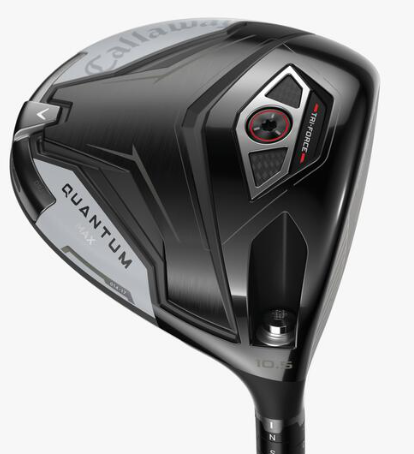
Quantum Max
$650
Lofts – 9°, 10.5°, 12°
Stock shafts – Mitsubishi Chemical Vanquish 40g (R2), True Temper Denali Frost Silver 50g (R/S), 60g (S/X)
Right and left-hand
Titanium has been the dominant material in driver construction since the mid-1990s when Callaway’s Great Big Bertha changed the game (titanium had already been used by some Japanese manufacturers for about five years). Initially, titanium was favored for its strength and durability, but it wasn’t long before Callaway recognized it could retain the strength while making the clubface thinner to increase how much the face flexes and affect greater ballspeeds. It was now the term ‘Co-efficient of Restitution’ became golf’s biggest buzzword as golfers sought face-flexing drivers that sent the ball farther down the fairway.
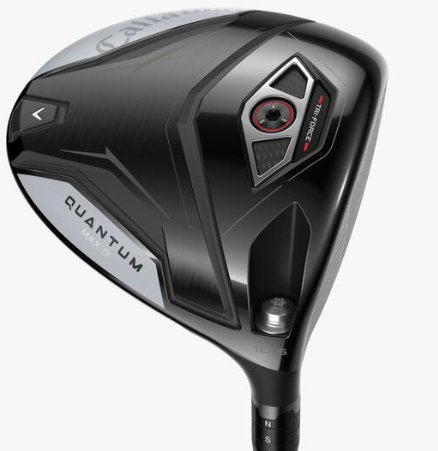
Quantum Max D
$650
Lofts – 9°, 10.5°, 12°
Stock shafts – Mitsubishi Chemical Vanquish 40g (R2/R), True Temper Denali Frost Silver 50g (R/S), 60g (S)
Right and left-hand (12° – right-hand only)
Titanium driver faces have continued to be thinned mostly unabated ever since to the point where the typical driver face now extends not much more than 2mm from front to back. That demonstrates incredible engineering certainly, but with ever-narrowing faces came potential problems.
Ballspeeds might have risen steadily but so did the potential for driver faces to deform or collapse altogether or even for CT Creep (the driver actually becoming more flexible over time through constant use and possibly becoming non-conforming) to become a significant issue for better players. At some point, Callaway and other manufacturers, realized pushing titanium to the absolute limit might create problems that didn’t justify the few extra yards. After all, what good was a driver that produced some of your longest ever drives for a few months before it started cracking or caving in?
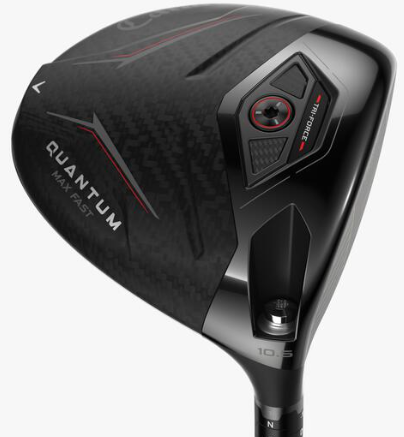
Quantum Max Fast
$700
Lofts – 10.5°, 12°
Stock shafts – Mitsubishi Chemical Vanquish 40g (R2), Mitsubishi Chemical Eldio 40g (WMS)
Right and left-hand
With its Quantum lineup, Callaway is introducing a new face made with three layers it calls Tri-Force. The outer layer which makes contact with the ball is extremely thin titanium. On the back of the face is a layer of carbon fiber, and between the two is a high-tech material called Poly Mesh that binds the titanium to the carbon fiber allowing the two to flex and recover in their own way and which was first developed for the ballistics field of mechanics and things like bulletproof vests. The Poly Mesh and carbon fiber reduce vibration, save a little weight and, together with the titanium, create a face that still flexes and creates impressive ballspeeds without risking deformation. Essentially, the properties of the three Tri-Force layers enable Quantum drivers to create more ballspeed with lower CT numbers which means these drivers not only perform well and have greater durability, they’re also less likely to fall foul of the rules. In addition to all that, thanks to the titanium, Tri-Force also keeps spin consistent reducing it on low-face hits and increasing it on high-face contact.
More consistent spin, ballspeed gains, lower risk of structural failure, lower risk of CT Creep and violating the rules – only time will tell, of course, and we’re reluctant to overhype it, but Tri-Force could potentially be Callaway’s next momentous game-changer.
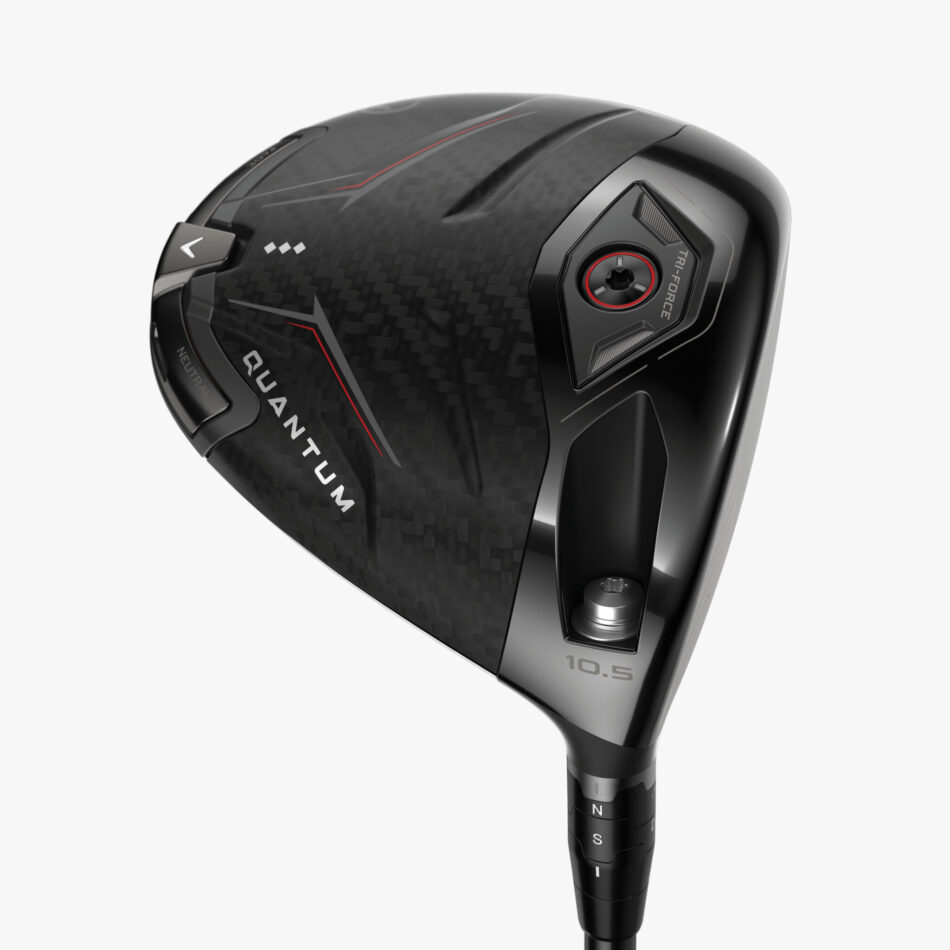
Quantum Triple Diamond
$700
Lofts – 8°, 9°, 10.5°
Stock shafts – True Temper Denali Frost Silver 50g (S), Fujikura Ventus Black 60g/70g (S/X)
Right and left-hand (8° right-hand only)
There are five Quantum models:
Quantum Max is the core model that will suit the widest range of players. It has a 460cc head and discrete weights at the rear (10 grams and 2 grams) that give you neutral and draw-based settings. A titanium chassis and carbon-fiber crown keep the Center of Gravity low producing a relatively high, stable launch.
A slightly closed face and internal weighting give the 460cc Quantum Max D a draw bias. The Quantum Max Fast, also 460cc, has a 360˚ carbon fiber chassis that makes it 15% lighter than the standard Max and the lightest of the five, making it ideal for golfers looking for a little more clubhead speed.
The compact (450cc), carbon-chassis Quantum Triple Diamond is the tour-inspired, better player-favored model with neutral or fade settings, low-spin, and a piercing trajectory. The 460cc Quantum Triple Diamond Max, meanwhile, is for players who prefer the Triple Diamond shape and neutral/fade options but also want a little more stability and forgiveness.
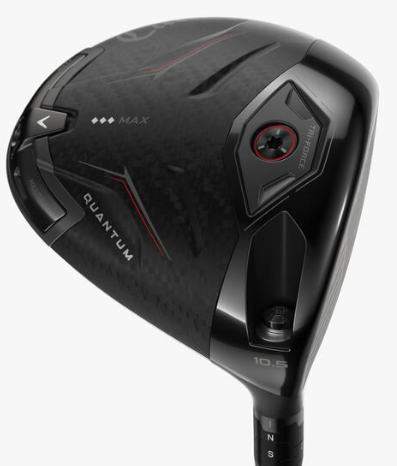
Quantum Triple Diamond Max
$700
Lofts – 9°, 10.5°
Stock shafts – Fujikura Ventus Black/Charcoal 60g (S/X), True Temper Denali Frost Silver 50g (S)
Right and left-hand
callawaygolf.com