Ping is good at making clubs that suit many golfers. The new i240 is no different.
By Tony Dear
We have reached a point in their evolution where golf clubs tick an awful lot of boxes – more, certainly, than the one or two they used to.
Ping i240
We’ve been here for a few years, of course, and the trend towards more forgiving players’ clubs and more attractive game-improvement clubs probably won’t be stopping anytime soon. Manufacturers know better than to create a single club, be it a driver, iron, wedge or putter that suits all golfers as marketing just one ideal product won’t fill a website – if such a club is even physically possible – but they have becomeadept at producing clubs that bridge gaps, blur lines, and appeal to an ever-widening range of handicaps.
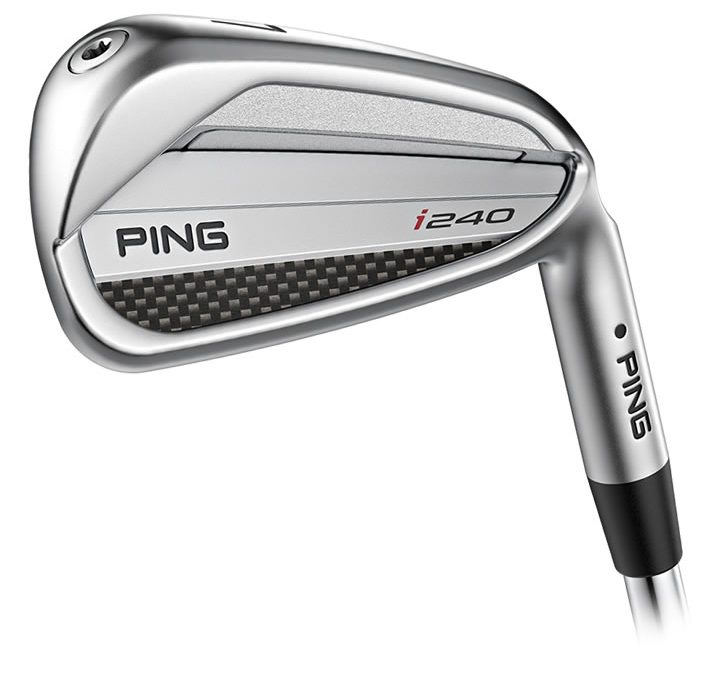
Ping’s new i240 iron is a great example. Look at the back and see the cavity and perimeter weighting, the multi-material back badge, and the thin strip of elastomer there to improve sound and feel and replace heavier steel (thus enabling Ping to push weight lower in the head and, consequently, the Center of Gravity, and also to the outsides, increasing the perimeter weighting – the i240’s MOI is roughly 2.5 percent higher than that of the i230);notice the width and bounce of the sole; and read that it’s cast from 431 Stainless Steel, and you’ll instinctively feel its target audience is game-improvers.
Put the club up behind the ball, however, and your first thought might be “better player”. Yes, the top line is fairly wide and a little offset is discernible but more than likely, you’re going to focus on how compact the clubhead is.
The i240’s footprint is larger than that of the elite-players-only Blueprint S & T, but it’s slightly closer to them than it is the company’s i5 series irons, and noticeably smaller than the G-series game improvement clubs. The i240 lives on the edge – in a border town where better players make up most of the population, perhaps, but where 5-10 handicappers are very interested in buying.
Ping i240
Because there’s more weight lower in the head, the i240 launches the ball higher than any of Ping’s other players’ clubs. The mid-handicapper will find that part reassuring and confidence-boosting, while the low single-figure playerwill appreciate the ball’s steeper angle of descent into the green.
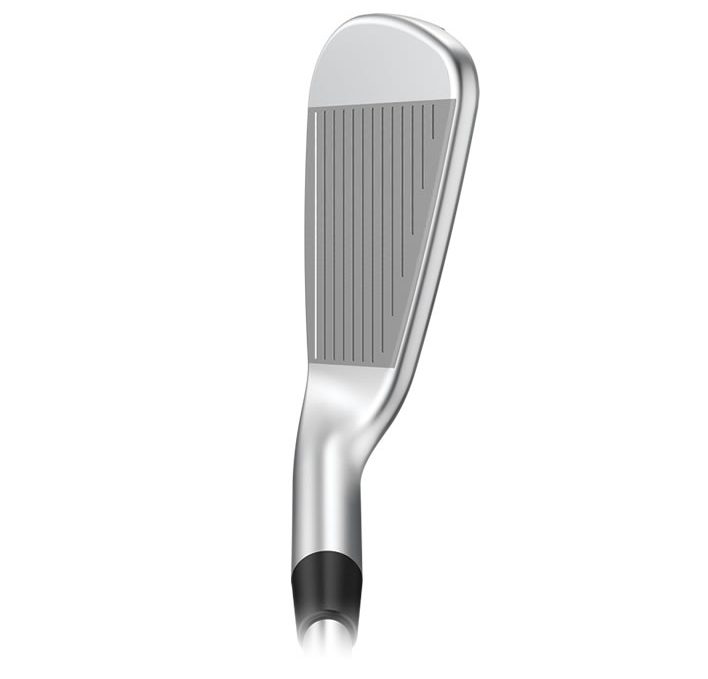
Elsewhere, the grooves have been changed. Gone are the narrowly spaced MicroMax grooves (found on the i530and i525 before it), which sought to preserve spin from the rough. They’ve been replaced by fewer, more widely-spaced grooves which, Ping says, actually increase spin from the fairway,where the i240 user will typically be playing from. That golfer wants grooves suited to use from the short grass more than he/she want grooves that perform consistently from anywhere through the green.
$217/club (steel); $232/club (graphite) – 3-UW Lofts – 4-22.5˚, 7-33˚, PW-45˚ (UW – 50˚) (Power Spec – long irons 1˚ to 1.5˚stronger; Retro Spec – 2˚ weaker than standard) Shaft – Nippon NS Pro Modus3 115 (steel), Ping Alta CB Blue (graphite). There are plenty of stock alternatives (see website) Right and left–handed. Available online now, at retail Thursday 7/17 ping.com
Colorado AvidGolfer Magazine is the state’s leading resource for golf and the lifestyle that surrounds it, publishing eight issues annually and proudly delivering daily content via coloradoavidgolfer.com.
Tony Dear is a former teaching professional and First Tee coach, now a freelance writer/author living in Bellingham, WA. He can be reached at [email protected]
Want to increase golf swing speed and hit longer drives? Learn two simple ways to add clubhead speed, improve hip rotation, and create more distance off the tee.
The Japanese brand that’s part of Dunlop Sports appears to be disrupting conventional launch dates with the September/October releases of its latest equipment