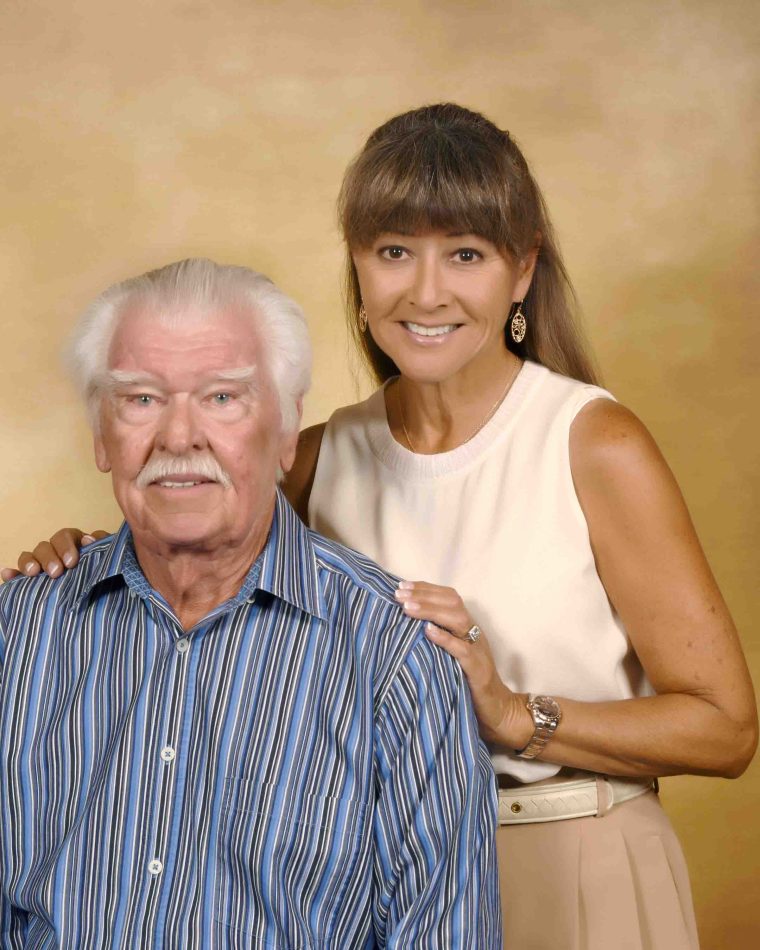
This spring, she has gone to his memory-care unit three to four days a week to spend the day with Barry, but several times a month, they pack up their clubs and head back to their home course for a golf date.
“He can’t count the holes – I mean, we get to nine and he’s like ‘Are we done?’ And I tell him No, we have nine more to go.” They play with friends and have friendly couples competitions. They often win. Barry routinely picks the right club for the right distance.
“I mean, he has this uncanny ability to be able to kind of look at a flag stick from wherever he is on the fairway or even the green and just his body just knows how far to hit the ball,” she said. “It’s incredible, and he doesn’t know his own grandchildren. I’m (one of) the only people that he recognizes. He recognizes his son, does not recognize his daughter-in-law, sometimes does not know his grandchild. But he can play golf.”
Arakawa was famously all about speed for much of her career. She raced cars, and is still a member of a motorcycle club and car clubs. She rocketed up a supremely competitive career ladder. After moving to Denver from Chicago, she covered the biggest stories in town – mass shootings, disasters, major events – for 24 years.
Even amid her Denver TV career, she tried to keep golf part of her life. She wanted to get good. She and Barry were members at Inverness in Centennial, and she would play or practice in the mornings before heading into the KUSA offices. “I never got great,” she said. Then over the past five years, as she and Barry continued to manage his disease and she took on more and more caretaker roles, golf – among the slowest of sports – again stepped in to help.
Barry’s friends would often drop by and take him off to play. That provided her with vital downtime away from the 24/7 reality that caretakers face when helping their spouses handle a life-changing medical condition.
“I mean (golf) has been my respite care,” she said. She has turned to it for herself, as well. At one point this winter, she played five days a week. She plays with friends or gets a quick round in for herself. “So honestly, golf has been my panacea,” she said. “For now, these recent years where it really has been a godsend, and I I don’t mean it to be trite in any way or disrespect in any way, but it has been the one thing that has helped me through what otherwise would have been a debilitating, life-al- tering crisis.”
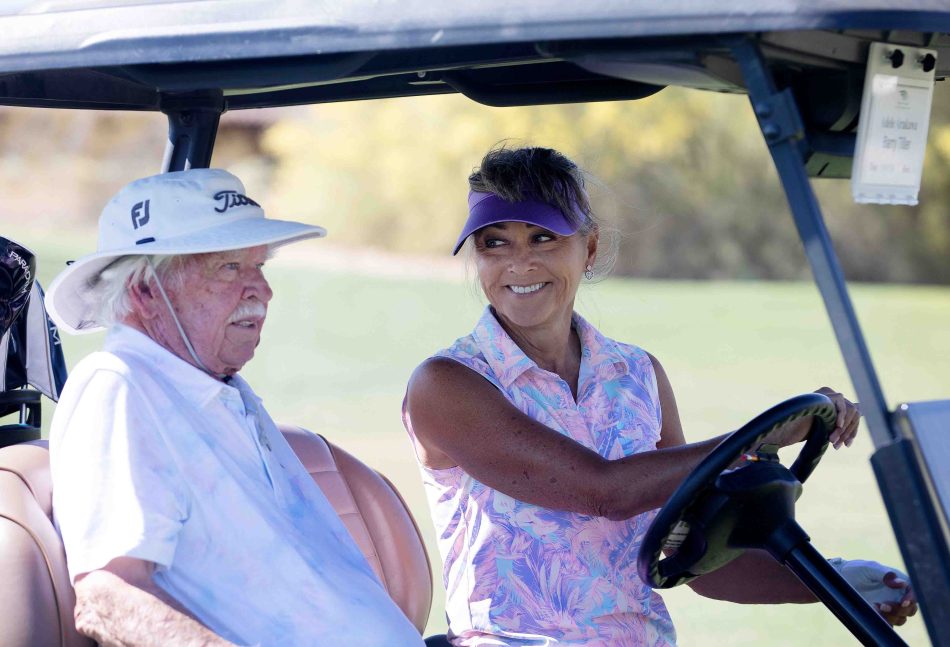
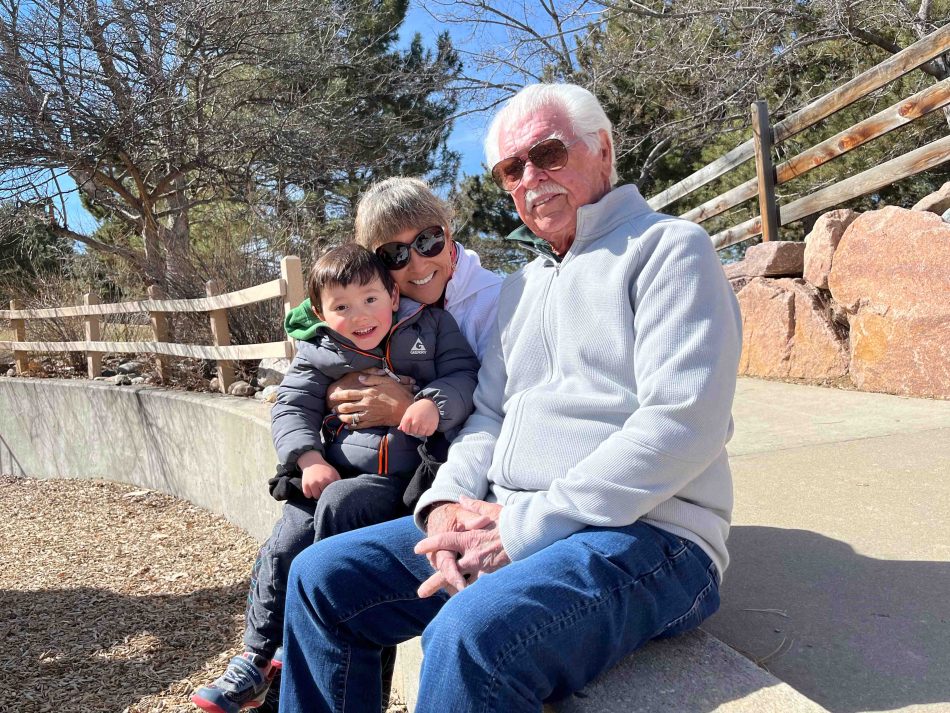
Arakawa plays most often at The Golf Club at Dove Mountain and The Gallery Golf Club, courses north of Tucson near their home. She makes it back to Denver often. Her son Travis his wife Kim and their 4-year-old son Akira all live here.
Barry’s situation is not uncommon. Crooner Tony Bennett died in 2023 at the age of 97. In 2021, he was in advanced stages of Alzheimer’s but during his final concerts that year, when brought on a stage or near familiar music, he was able to sing and perform for an audience and recognize fellow performers by name.
More than 7 million Americans have Alzheimer’s and an estimated 12 million Americans provide unpaid care to people with Alzheimer’s and other forms of dementia, according to the Alzheimer’s Association. The Association has local chapters across the country, and there is a 24/7 helpline nationwide, free of charge (800.272.3900).
Arakawa said she is learning a lot about how different stages of life can make it important to keep communities of other people near and dear.“It’s been a journey,” she said. “In some ways, you know, the senior populations can often be marginalized.
“And this is teaching me how people may see certain individuals as being somehow with shortcomings and they cannot do this, cannot do that. Oh my gosh, you got to look at what they can do because it’s incredible what the body and what the mind is still able to do despite having an affliction like Alzheimer’s or having some other challenge physically or mentally. You just find ways to make life valuable and vibrant for that other person because there’s a way to do it.”
So now Arakawa nurtures her relationships with Barry, with friends, with neighbors, and with as many communities as she can. “It’s just like a friend who’s been through it and just lost her husband in January. You truly have to take it one day at a time, every day is different,” Arakawa said. “Every day is going to bring something new or one day is going to be much better than the other day. You’re going to have a bad day or two. But just take it one day at a time and know that you have this community around you – your golf community, your car community, your motorcycle community, your neighborhood community.”
“Make every day count. It may not be the same as it was before. It’s a new normal, and that’s my hardest lesson.”