Colorado’s sand-green golf courses
The tradition of sand-green is hanging on in Colorado’s eastern plains

By Tony Dear
Laser rangefinders have been part of a golfer’s cache long enough for us to know what’s important and what’s superfluous. Obviously, an array of useful features is preferable and distinguishes a high-end unit from point-and-shoot, bargain-basement models, but, as with all gadgets, the optional extras – those on bullet-point lists of capabilities that can certainly grab people’s attention – are only any good if the basics are sound.
A $500 rangefinder with an impressive list of add-ons sounds great but won’t be much good to anyone if it looks awful/clunky, the accuracy is questionable, the build isn’t strong, the information you need isn’t available almost instantly, or the visuals are less than sharp (such a unit probably doesn’t exist, but you know what we’re getting at).
Before considering what extras (slope – hilly course? green-reading, hole maps, weather stats, camera/video, magnet, game-tracking, club suggestions…) might be appealing or useful for you, you need to be sure it does all the essential stuff well – is it accurate to within a yard? If not, we hope you’re not paying much. Does it give you your required number(s) quickly? If not, are you holding up play (there are probably more tiresome and frustrating things on a golf course than waiting for your playing partner to shoot their number, but not many)? And can you clearly see the information the rangefinder is giving you? Or is an excessively-fancy font, poor lighting, or an over-crowded viewfinder preventing you from seeing what you need to see?
Other things to consider before choosing which rangefinder is best for you include:
– Magnification (good magnification improves the speed at which your target is identified).
– Vibration/jolt to let you know you’re locked in.
– Your budget/value for money.
– Subscriptions (most rangefinders won’t need a subscription, but hybrids which also feature GPS will, depending on the quality and detail of the image.
– Battery life (and what type of battery comes with the rangefinder).
– Quality of carry-case.
Given what’s important when looking for a rangefinder, here’s what we think are the top five you can buy right now:
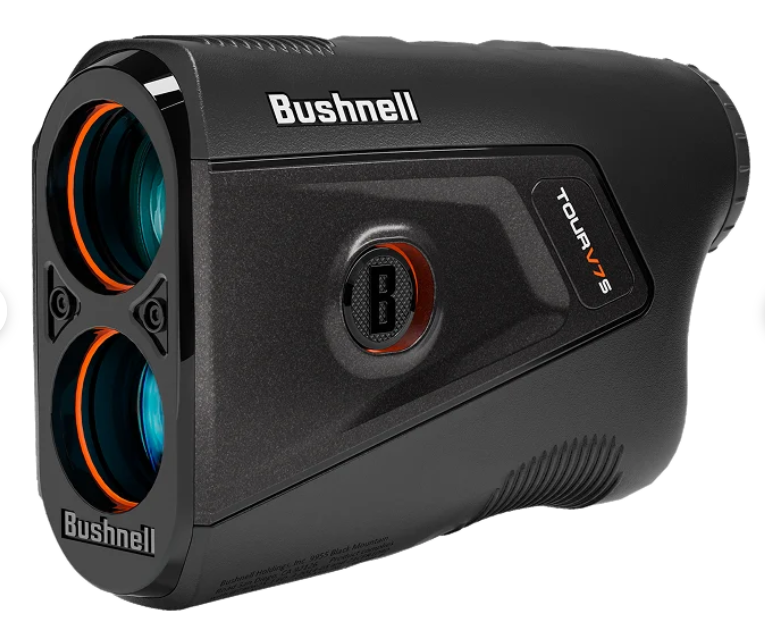
Bushnell Tour V7 Shift
If you’re looking for a handheld laser rangefinder only (you physically shoot the pin), it’s hard to know what you could possibly want or need that the Tour V7 Shift doesn’t give you. The red/green OLED display is clear and easy to understand; there’s 6X magnification; it is reliably accurate; the slope feature is easy to enable and disable; you can easily get your last ranged distance; you not only feel the device jolt when you lock onto the flag but also see a flashing red ring; Link-enabled Technology from ForeSightSports connects your rangefinder to your launch monitor to give personalized club recommendations; and a BITE magnetic cart mount makes it easy to retrieve your rangefinder. It has a two-year warranty and an IPX6 Water-Resistance rating. And at $400, what’s not to like? bushnellgolf.com
Bushnell Tour Hybrid
The Tour Hybrid has GPS capability as well as being a laser rangefinder, giving you Slope-adjusted distances to the front, middle, and back of the green without you having to shoot them. You don’t get the red/green OLED display, however, but the all-black LCD display works just fine (come on, it’s Bushnell). You do not have Yardage Range Recall, and it is not Link-enabled. You do have the physical and visual jolt; Slope; the BITE magnet; and Bluetooth can link to the Bushnell app for hole maps. 6x magnification and a two-year warranty. A beautiful design and priced at $500. bushnellgolf.com
Mileseey GenePro G1
The golf division of Shenzhen Mileseey Technology Co. which makes industrial laser precision-management tools and was founded in Shenzhen in 2009, Mileseey started out selling discount rangefinders on Walmart. Although it still offers less-expensive models, it has become associated with high-end products such as the GenePro S1, the world’s first AI rangefinder, which launched in early 2025 and retailed at $800, and the GenePro G1, which came shortly after and costs $500.
The GenePro G1 is a hybrid rangefinder/GPS with a 2.13” AMOLED touchscreen and 43,000 courses. The G1 is small (fits easily in your pocket), looks really cool, and can pretty much do it all. mileseeygolf.com
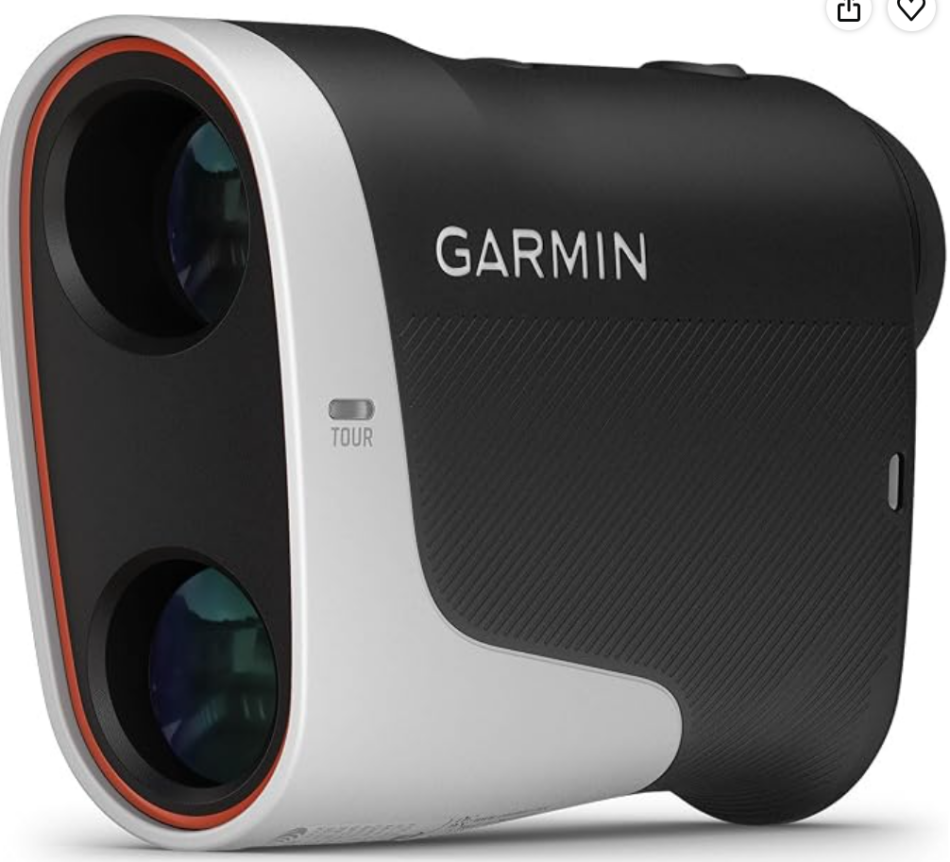
Garmin Z30
There are plenty of golfers, hunters, and others who use distance-measuring devices who’ll tell you that if you don’t buy Bushnell it’s got to be Garmin. Always reliably accurate, the Z30 also has an innovative “Find my Garmin” feature, and it pairs with the company’s smartwatches and handhelds. “Plays Like” provides slope-adjusted distances, and it has 6x magnification and a magnetic cart mount. $450. garmin.com
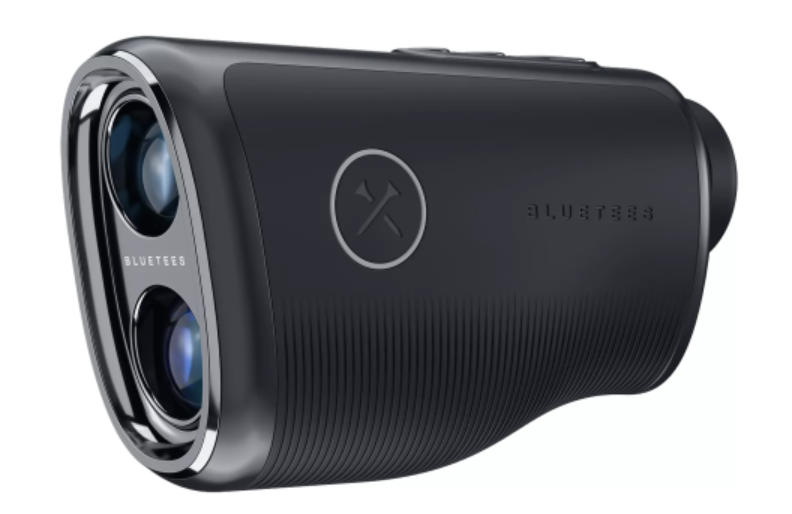
Blue Tees Captain Pro
We first featured this California company in 2021 and have watched it closely ever since. While adding to its product range with handheld GPS units, a speaker, launch monitor, and accessories, it has continued to excel at very reasonably-priced rangefinders. The stylish Captain Pro is priced at just $250 and features 7x magnification and pairs with the Blue Tees app to give distances to the front. middle, and back of the green. With numerous other features, the Captain Pro is highly recommended. blueteesgolf.com