Tour Edge and Wilson’s recent introduction of highly affordable zero-torque putters makes technology accessible to a greater number of golfers. Of course, Tour Edge knows all about making high-performance clubs accessible.
By: Tony Dear
As golfers, we’ve become quite familiar with the concept of torque in recent months. A natural force, defined as “The rotational correspondent of linear force”, torque is basically the twisting force that causes objects to rotate. In the context of putting, because of the clubhead’s design (shaft axis and CG position relative to each other), traditional putters naturally want to open during the backswing and return to square before closing on the through-swing. Traditional putters, therefore exert a level of torque on the hands.
Listening to some putter manufacturers, you’d think the hands are in some biblical battle against the evil powers of torque, but, of course, golfers have had to deal with this menacing, invisible energy for centuries and have survived okay, with some, like Ben Crenshaw, Jack Nicklaus, Brad Faxon, Tiger Woods, and Bobby Locke, faring better than others.
We know we’ve explained this before, but for those at the back: the more we practice and the more innately talented and sensitive to it we are, the better we are at minimizing the effects of torque. What zero-torque putters do is virtually eliminate the club’s tendency to twist while in motion which puts less of a burden on you to square the face.
Immediately after setting out on the road to what we can now legitimately class as mainstream acceptance, zero-torque putters looked all kinds of odd owing to the fact that it was necessary to have the shaft meet the head midway between the heel and toe in order for the shaft axis to align with the head’s CG.
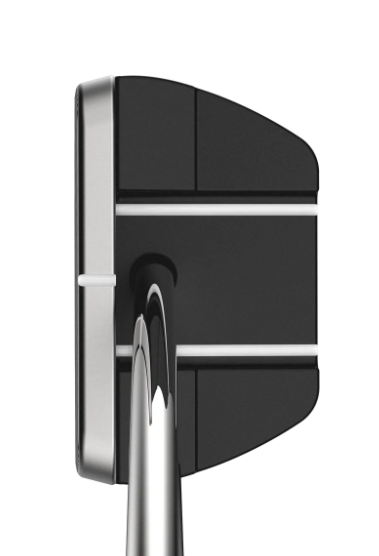
Being center-shafted limited early ZT putters’ appeal, but over time the shapes have mellowed, and manufacturers have even found ways to configure the weight and manipulate the shaft/hosel to reposition the hosel much nearer to the heel, thus attracting a whole new division of golfers to the ZT universe.
Besides their hard-to-get-used-to appearance, another thing that put people off zero-torque initially was the price. And though they have found widespread approval, they are distinctive putters which, today, means they remain high-end items.
This is where Tour Edge comes in, just like it has for the last 40 years. Born to make quality equipment and sell it for significantly less than the larger OEMs, Tour Edge last week released its Zero T putter series – four center-shafted designs featuring different MOIs and alignment marks and all priced at less than $200. Tour Edge isn’t the first company to offer ZT at a greatly reduced price, though as Wilson Golf introduced its all-black (with white alignment markings and lettering) Lakeview and 606 models two weeks ago.
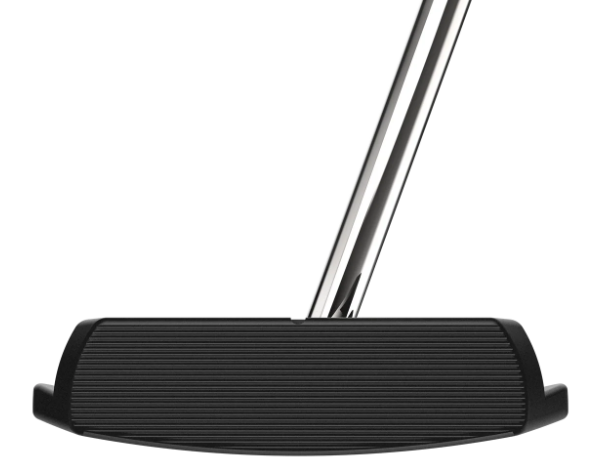
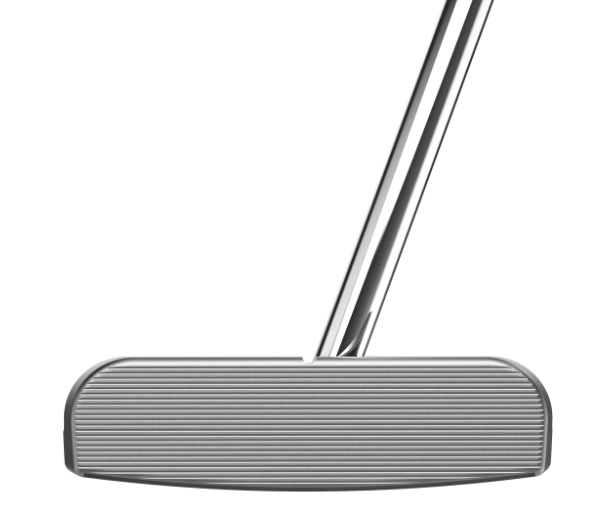
The Zero T line consists of four mallets with easy-to-remember names – ZT-1, ZT-2, ZT-3, and ZT-4. The first three are cast from 304 stainless steel and feature horizontally milled faces designed to create a smooth, predictable roll, while the ZT-4 has an aluminum body and a TPU face insert. The 1, 2, and 3 are fairly familiar mallet shapes, while the 4 evokes the larger footprint/MOI shape of LAB Golf’s original model, the DF 2.1.
Cynics often say Tour Edge takes already successful designs/concepts and merely redesigns them, riding trends without having the R&D muscle and innovation of industry leaders. Tour Edge loyalists, meanwhile, celebrate the company for pretty much the same thing, saying its products perform as well, or very nearly as well, as equipment that costs twice as much.
You can certainly see both points of view, but in today’s age of $700 drivers, $1,500 iron sets, and $500 putters, we’ll take affordable quality any day.
$200 each
Length – 34”, 35”, and 38”
ZT-1 and ZT-3 are right-hand only. ZT-2 and ZT-4 are available in right and left-hand.
Available now
touredge.com