Hillcrest Golf Club – Golf Passport Course of the Week
Durango’s destination for golf since 1969

By Tony Dear
It really is hard to know where to start when talking about Cleveland Golf’s new RTZ 2 wedge. The second generation of a new product typically doesn’t create quite as much excitement as the original, but the RTZ 2 is so much more than a simple/minor advance on its predecessor. No, it probably doesn’t warrant a new moniker altogether because it is, technically, the next step for the technology that prompted the last name-change in Cleveland wedges, and it doesn’t introduce some momentous new direction for wedge design, perhaps. But there’s so much worth talking about and shedding light on.
It makes sense to start with the Z-Alloy since that is where the ‘Z’ in the club’s name comes from. This is, admittedly, the same Z-Alloy that was used for the original RTZ wedges, introduced at the start of 2025. So it’s not new, but the magnitude of creating such a high-performing material keeps it front and center.
Z-Alloy was developed by Cleveland’s Boeing Smith, a metallurgist with a PhD in welding/metallurgical engineering whose job it had been to find a material that was somehow superior to the 8620 steel that had/has been used in wedge construction for decades. After scouring various industries (oil/gas, aerospace, etc.) but finding nothing that ticked every one of the boxes he’d identified for this new material, Smith realized he’d have to develop his own. It took over three years for him and his team to come up with something that was lighter and softer than 8620 but also more durable and which didn’t rust, but the result was very definitely worth it.
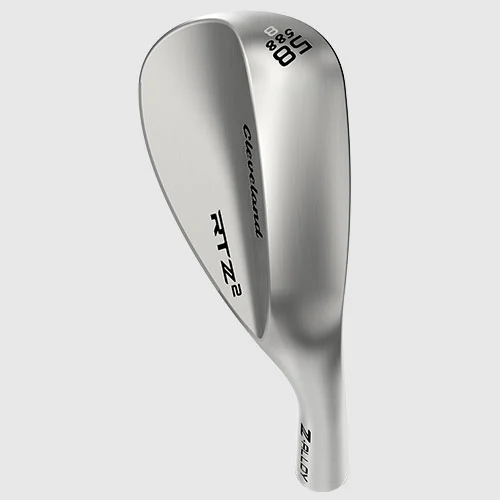
Next up is another notable Cleveland innovation that has been modified for the new clubs. ZipCore is a low-density material (an aluminum silicate compound) that Cleveland first positioned in the hosel in place of high-density steel in 2020 with the RTX ZipCore wedge. Because it saved 16 grams of weight that could be put to use elsewhere in the clubhead, ZipCore effectively moved the clubhead’s Center of Gravity, positioning it closer to the middle of the face, which increased the club’s MOI and improved the feel of impact. That gave a little more forgiveness to a Tour-inspired blade wedge.
ZipCore was a popular addition and appeared in subsequent Cleveland wedges – CBX ZipCore, RTX 6, and the original RTZ. For the RTZ 2, the ZipCore’s shape and weight have been altered for each loft and sole grind to facilitate playing the shots you’ll probably hit with each club. This new ZipCore goes by the name ZipCore IQ, with the position of the CG in the lower-lofted wedges (used predominantly for square-face, full-ish shots) mirroring that of its position in irons. The higher-lofted wedges, meanwhile, have a CG that is slightly elevated to produce a slightly flatter, more-controlled trajectory.
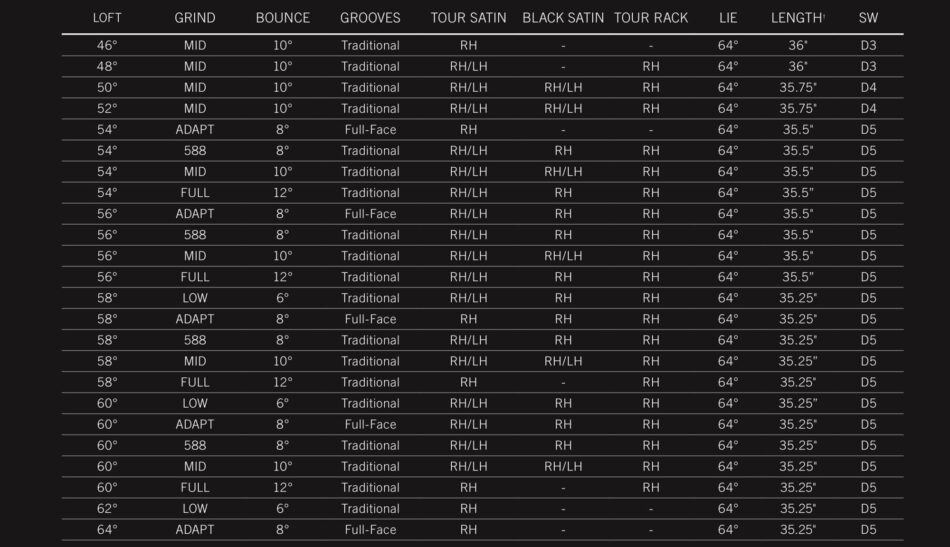
The next feature that makes the RTZ 2 so noteworthy could very easily be its most notable. It’s not the fact a fifth grind has been added to Cleveland’s hitherto limited range of grinds – LOW. MID, FULL and, since last year’s launch of the RTZ, the ADAPT grind with its high toe, full-face grooves, and heel, toe, and trailing edge relief – but rather what the fifth grind is.
In March of 2025, after 28 years at Callaway Golf, Roger Cleveland returned to the company he had founded in 1979. Prior to introducing his hugely-successful 588 wedge in 1988, Cleveland had produced persimmon woods, forged blades, and a replica of the famous Calamity Jane putter. The 588, though, was Cleveland Golf’s major breakthrough and remained as part of the company’s wedge line-up in various guises until 2014/15 when it was finally dropped from its branding. A limited edition, three-wedge, 588 Tour Action set was offered earlier this year, but now the new RTZ 2 family includes the ‘588 Grind’ with increased bounce in the toe and reduced bounce in the heel to deliver what Cleveland describes as “exceptional versatility and forgiveness”. The 588 Grind is best for moderate to shallower swing types, and is available on the 54°–60° clubs. The 588 Grind makes this particular model very similar to the original 588, but all the extra tech makes it an RTZ 2 wedge.
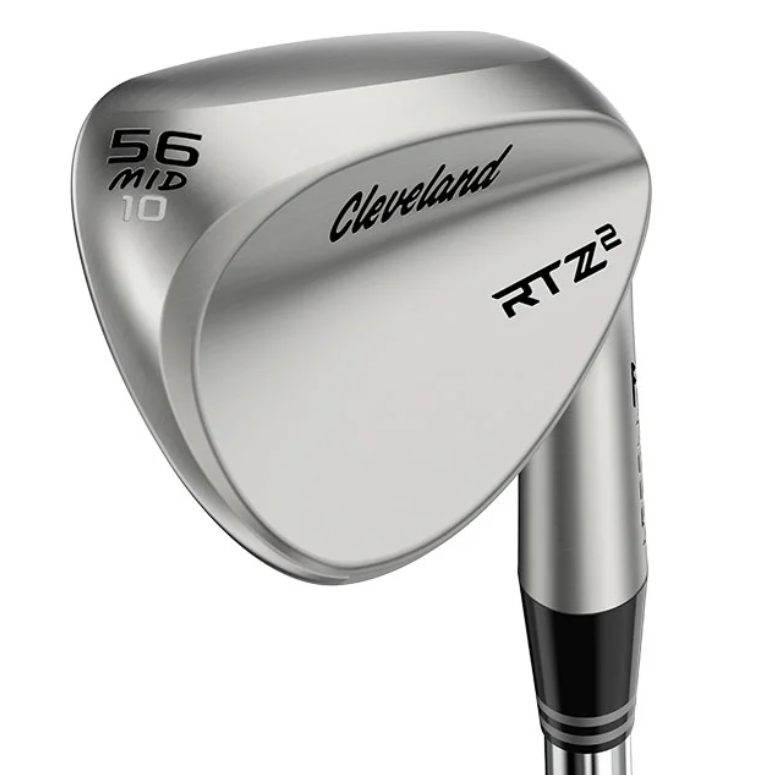
As for the face, you’ll find sharp, deep UltiZip grooves whose depth creates consistent spin from bunkers, rough, and fairways while minimizing the effect sand, grass, water, and dirt can have on impact; and the HydraZip face-blast which maximizes spin in wet conditions.
The RTZ 2 is available in three finishes – Tour Satin, Black Satin, and Raw (called Tour Rack Raw), and personalization options include paintfill, engraving, skins, ferrules, and alignment lines.
$200 (Black and Tour Satin); $220 (Tour Rack Raw)
Lofts – 46̊ – 64̊
Shafts – Black Satin and Tour Satin: True Temper DG Spinner Tour Issue; Tour Rack Raw: Dynamic Golf Tour Issue S400
Right and left-hand (not in all lofts/grinds)
Available to pre-order now (with free personalization) at clevelandgolf.com. Available at retail on September 4th.