Edens makes Mid-Am Final Eight again
Colorado players holding their own in 2026 USGA Mid-Am

By Jim Bebbington
It can take so long to get to Inverness, Scotland, from Denver that it is easy to feel that a golf trip there is like visiting another world entirely.
If you leave Colorado in summer, you will usually land in fall-like weather.
Depending upon your route, you can easily patch together an itinerary involving a 10-hour flight, three trains, and finally a rental car.
The waterfront that you will spend most of your visit staring out upon while sipping scotch – that’s the North Sea.
And the songs you will hear in the pubs, and at times sing along with, will be tales of longing for a land, a time and a people far away.
But the reason to make this trip, for a golfer, begins a short drive north of Inverness at Royal Dornoch.
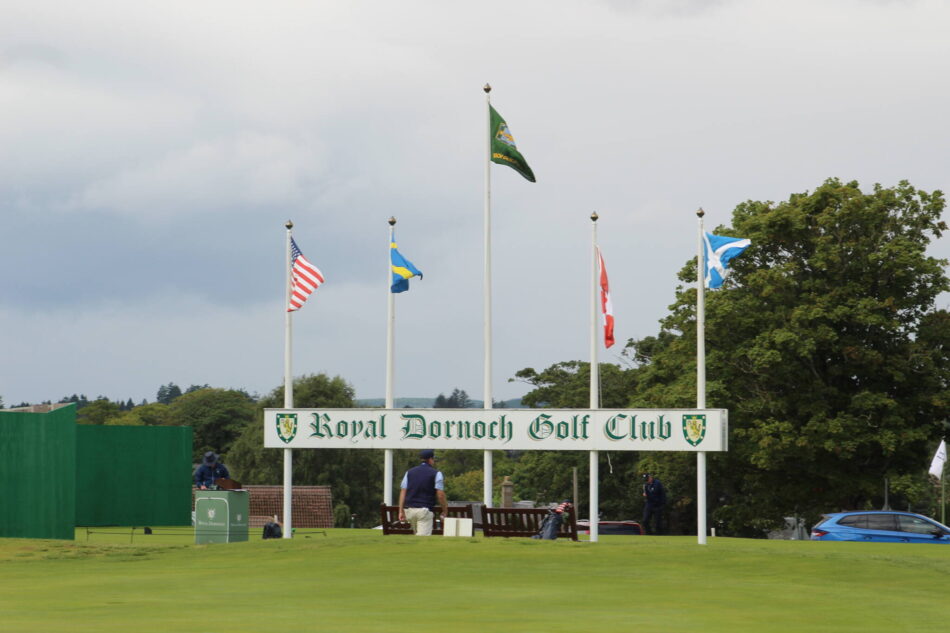
Royal Dornoch, the course, is usually listed among the finest courses in the world. It would be includ-ed regularly on world-wide broadcasts of the Open Championship if not for the fact that it is so remote – even by Scottish standards. It is seen as lacking enough hotels and roadways for visitors and players to get in and out. It hosts national tournaments frequently, but without a train depot nearby cannot bring 25,000 people in and out very easily.
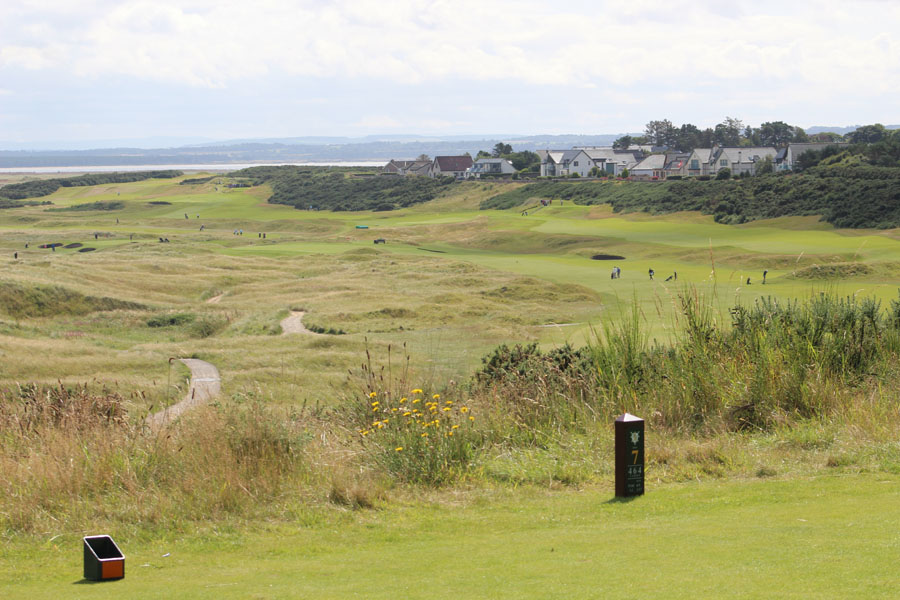
All the better. While Royal Dornoch hardly counts as anyone’s little secret, it does not get trampled upon like the Old Course in St. Andrews or its all of the bangers east of Edinburgh.
And that is for the best, because a round of golf on the Royal Dornoch Championship Course is worth sipping slowly and savoring.
The routing is links golf at its most pure. The first two holes and the final two take players to and from the coast, but are mostly inland. But for the other 14 holes players will visit rolling, beautiful, creative and diabolical layouts. Holes 3 to 8 are up on a bluff-top with the sea on the right. The course will then make the turn back to the clubhouse, dip down to the shoreline and be played with the thundering sea on the left.
While there is no one designer to credit, but its pedigree is essentially the foundation of modern golf architecture. The Scot Old Tom Morris is given credit for the primary layout of the Championship Course. Then in the late 1800s a local boy, Donald Ross, took the job of keeper of the green and began to build upon his experience before emigrating to the U.S. and becoming one of the pre-eminent golf course architects of the golden age, designing The Broadmoor, Wellshire Golf Club and Lakewood Country Club among his accomplishments.
What they all created is a beautiful and challeng-ing test that next looks inviting, but can punish sloppy play very quickly.
“It is steeped in history,” said Hugh McBride, and assistant professional. “We celebrate 150 years in 2027. Through that time there’s been a lot of changes to the course, but it still has a lot of the original course that was laid down when Donald Ross was here and when Tome Morris was here.”
Royal Dornoch has fewer mid-fairway bunkers than the Old Course. Many of its greens are towers, with almost everything sloping towards the sea. The mid-handicapper will want to freshen up their revetted-bunker skills, as that is the majority of the death-pits and they will face.
Hole No. 2 is when the personality of the course really begins. It is the last one which Donald Ross gave advice to the shape of, in the late 1920s.
“The second hole, a par-3 170 yards, you can play that some days with a pitching wedge and other days a driver depending on which way the wind is coming,” McBride said.
As the round progresses the Scottish dunes will come into play repeatedly for any shot that leaves the fairway. Like most Scottish courses, the dune heights are not about shock or awe. The dune heights at Rodeo Dunes in Roggen are far taller. But it is the subtle roll which can, at the last moment, divert a rolling shot into the low rough that is the constant threat here.
The par 4 14th hole, named Foxy, is one of the most famous par 4s in the world. There are no bunkers. The distance is not vast – a strong 445 yards but nothing inhuman. Success on the hole takes two excellent shots, and patience and good decision-making on the turtleback green.
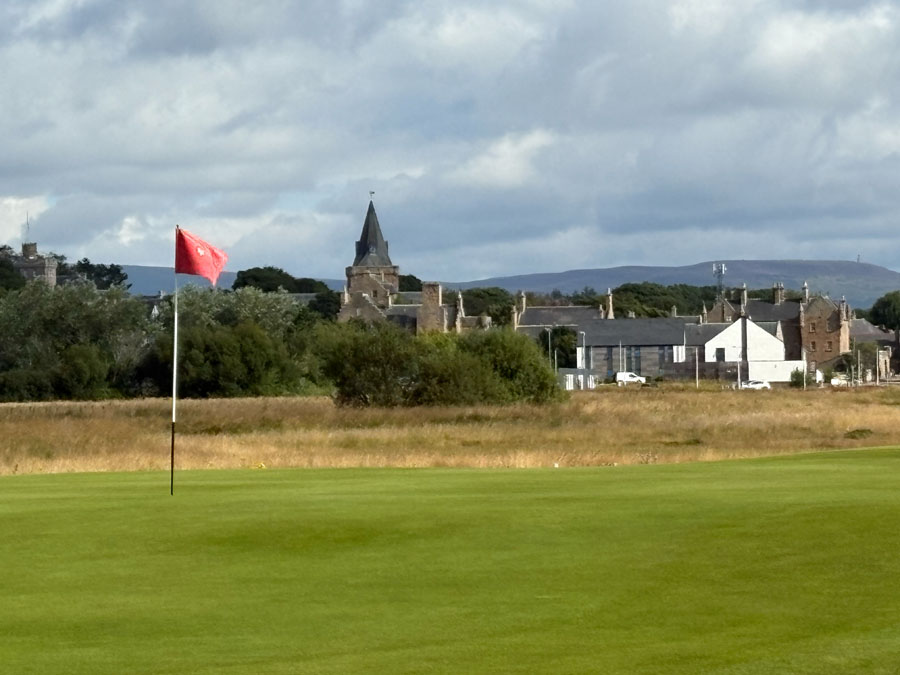
The 18th, another long par 4, brings players now directly toward the new clubhouse which opened this year. With dense gorse on the left, the hole rewards precision over brute strength.
Five-time Open Champion Tom Watson tells the story about how he learned to love links golf. He hated it initially. Then a friend took him to play several courses that he had not yet experienced – Royal Dornoch among them. They played in the morning, then were inside at a reception when gales of rain began to sweep the course. Looking outside from the warm safety of the bar, drinks in hand, Watson turned to his friend.
“What do you think?”
“I’ll organize the caddies.”
And they went out again into the howling wind and blustery rain, for a twilight 18.”That’s when I fell in love with links golf,” Watson said.