Kupcho ready for her fourth Solheim Cup
Westminster native has played in last four international competitions

By Tony Dear
Though some manufacturers come awfully close to making the claim, most golfers know that creating the perfect golf club, one that suits all players and optimizes everything you want in a club (ballspeed, forgiveness, stability, feel, control, looks, launch, spin, etc.) is impossible.
Like physically impossible…literally.
Much as some clubmakers like to say their latest does this and that, a little thing called physics usually gets in the way. By increasing a club’s MOI, you may reduce its aerodynamic capabilities, for example; by creating the shape, dimensions, and appearance you want, you might somehow limit feel. Sacrifices need to be made somewhere; the trick is to sacrifice as little as possible in all the right places.
We know today’s golf club engineers are wizards – former NASA employees in some cases. They are the nerds that golfers love because they use all their smarts and experience to build golf clubs that make the game more enjoyable (we’re loath to say “easier” because we never want golf to become easy. The challenge is the appeal, though we do want to be able to overcome the challenge at least occasionally). But even they are unable to change the laws of physics – bend them to squeeze a few more MPH or MOI out of a club, perhaps, but change them, no.
Titleist is associated with the better player, and while it certainly doesn’t reject chasing MOI altogether, it looks at MOI differently than its competitors. It will happily make its clubs a little more forgiving than its predecessors, but, in a way, it would rather build clubs that make you a better ballstriker and less dependent on forgiveness.
The most significant, though barely noticeable, difference between the highly successful GT drivers and the new GTS family is the increased use of PMP – Proprietary Matrix Polymer – which was used for the GT’s crown but now covers roughly 60 percent of the club (while making up just 13 percent of its weight).
The resin used in older model carbon-fiber crowns produced a slightly weak, muffled sound that lost the club marks. And while it doesn’t create the same explosive crash as titanium, PMP does give the GTS a more titanium-like sound. And because it’s light and covers so much of the body, 30 grams of discretionary weight was realized – weight engineers could use to increase MOI slightly by positioning some of it rearward while, at the same time, pushing some forward to retain the CG’s position, help ballspeeds and lower spin. This Split-Mass was present in the GT, but the GTS takes it a step further.
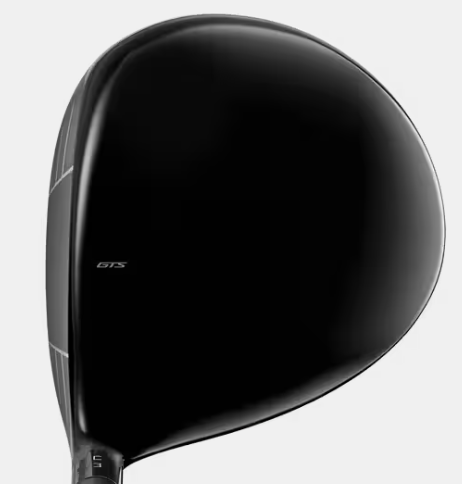
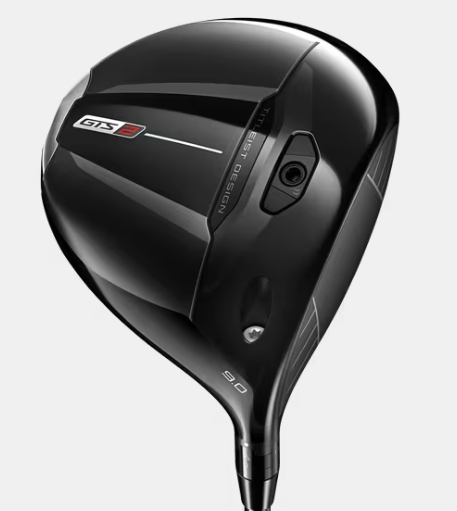
More conspicuous are the clubheads’ shapes. The GTS2 and GTS3 have raised rears and more teardrop-shape heads – Titleist’s aero – which makes them appear significantly flatter, sleeker, and shallower than the GTS4 although all three are 460cc. The aero shape improves the club’s aerodynamics, and while the attractive GTS4’s aerodynamics certainly aren’t bad, it doesn’t cut through the air quite as efficiently as the GTS2 or GTS3.
Even less visible than the PMP, but similarly effective, is the Speed Sync Face which alters the shape of the GT’s Speed Ring (a band around the face’s perimeter to increase face inflection) – more of a U-shape than a circle – to increase ball speed on above-center hits.
The weighting adjustability among the three drivers is relatively complex, meaning a skilled fitter should be engaged to help you find the configuration that best suits you. It might mean another trip or more time fitting when you could be hitting, but the time will more than likely pay off.
Basically, the GTS2 has moveable forward and back weights (11 grams in the rear, five grams up front, which can be swapped to adjust spin-rate, launch, and MOI) while the GTS3 and GTS4 feature a track-weighting system comprised of a five-gram back weight and an eight-gram weight in the front that slides to one of five positions (different degrees of draw and fade).
Theoretically, the GTS2 will be most popular with higher-handicappers and slower swingers, the GTS4 with highly-skilled players. But there are so many possible configurations you probably shouldn’t assume which GTS driver will fit you best and how you should position the weights. As mentioned above, time with a fitter will be time well spent.
Once you lock in the optimal scheme/arrangement, you’ll be able to take advantage of the aerodynamic, audio, and face-flexibility enhancements and see for yourself why the GTS drivers are fast becoming the most popular drivers on the PGA Tour.
$699
Lofts – 8˚, 9˚, 10˚ (GTS2 also in 11˚)
Shafts – Project X Titan Black, Mitsubishi Tensei 1K White RIP, Mitsubishi Tensei 1K Blue RIP, Mitsubishi Tensei 1K Red. Premium shafts available.
Right and left-hand.
Pre-sale and fittings available now; full retail begins 6/11.
titleist.com
Colorado AvidGolfer Magazine is the state’s leading resource for golf and the lifestyle that surrounds it, publishing eight issues annually and proudly delivering daily content via coloradoavidgolfer.com.